EP6: Gender Equality and Pastoralism in the Horn of Africa
Interview with
Dr. Zeremariam Fre
Founder of PENHA, Associate Professor at UCL Bartlett
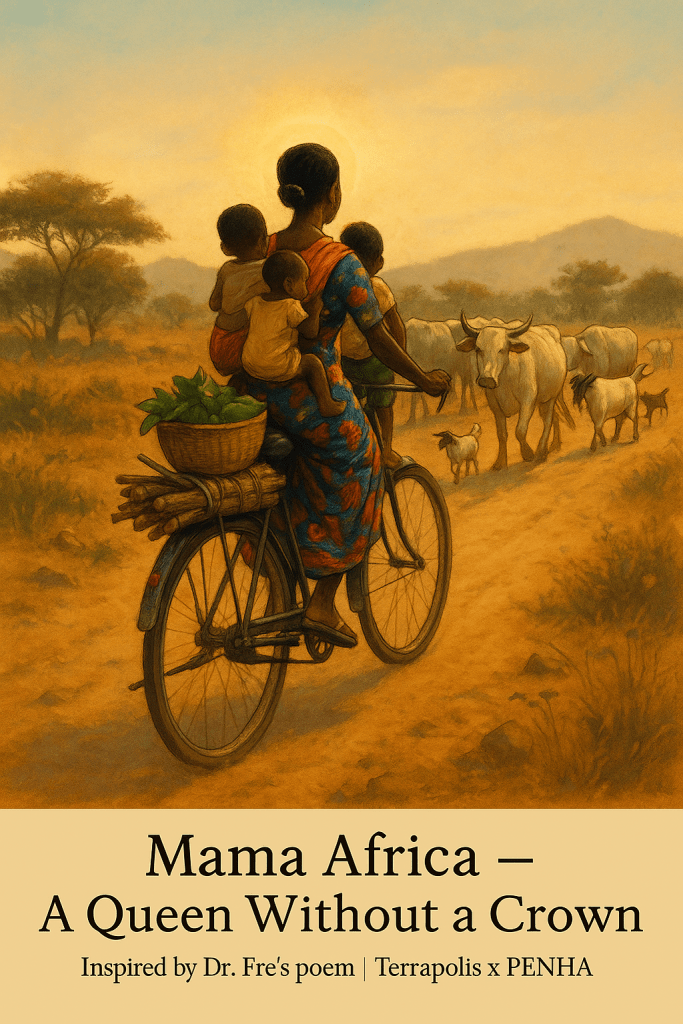
Mama Africa
Carrying multiple burdens with hope and dignity. Three kids from the back to front, riding your bike, firewood on the saddle, and shopping load on your head. Your burdens with hope and dignity. You are fashionable too, Mama Africa. To me, you are a queen without a crown.
But my pain is the knowledge that you would have the crown if this world were not an unfair world. Mama Africa, you are barefooted but surefooted. tenacious, never giving up on the uphill struggle. You are a queen without a crown. but my pain is the knowledge that you would have the crown in this world if it wasn’t an unfair world.
You bring strong memories of my childhood, Mama Africa, my childhood — of a mother like you who also carried multiple burdens and got me where I am.
Keep up the fight, Mama Africa, till victory. Your kids will become adults, as I become one. They will wipe away your tears, fight for your cause, and create a fairer world for mothers like you.
In the Horn of Africa, pastoralist communities have long been marginalized, their way of life often misunderstood and undervalued. Within these communities, women face even greater challenges, existing on what Dr. Zeremariam Fre describes as “the margins of the marginalized.” For over three decades, the Pastoral and Environmental Network in the Horn of Africa (PENHA) has worked to address these disparities, advocating for gender equality, sustainable development, and regional peace.
PENHA’s Mission and Legacy
Founded in 1989, PENHA emerged as a response to the systemic marginalization of pastoralist communities across Ethiopia, Eritrea, Kenya, Somalia, South Sudan, Sudan, and Uganda. Dr. Fre, a founding member, explains that PENHA’s mission was twofold: to amplify the voices of nomadic communities and to challenge the cultural and political structures that perpetuate inequality.
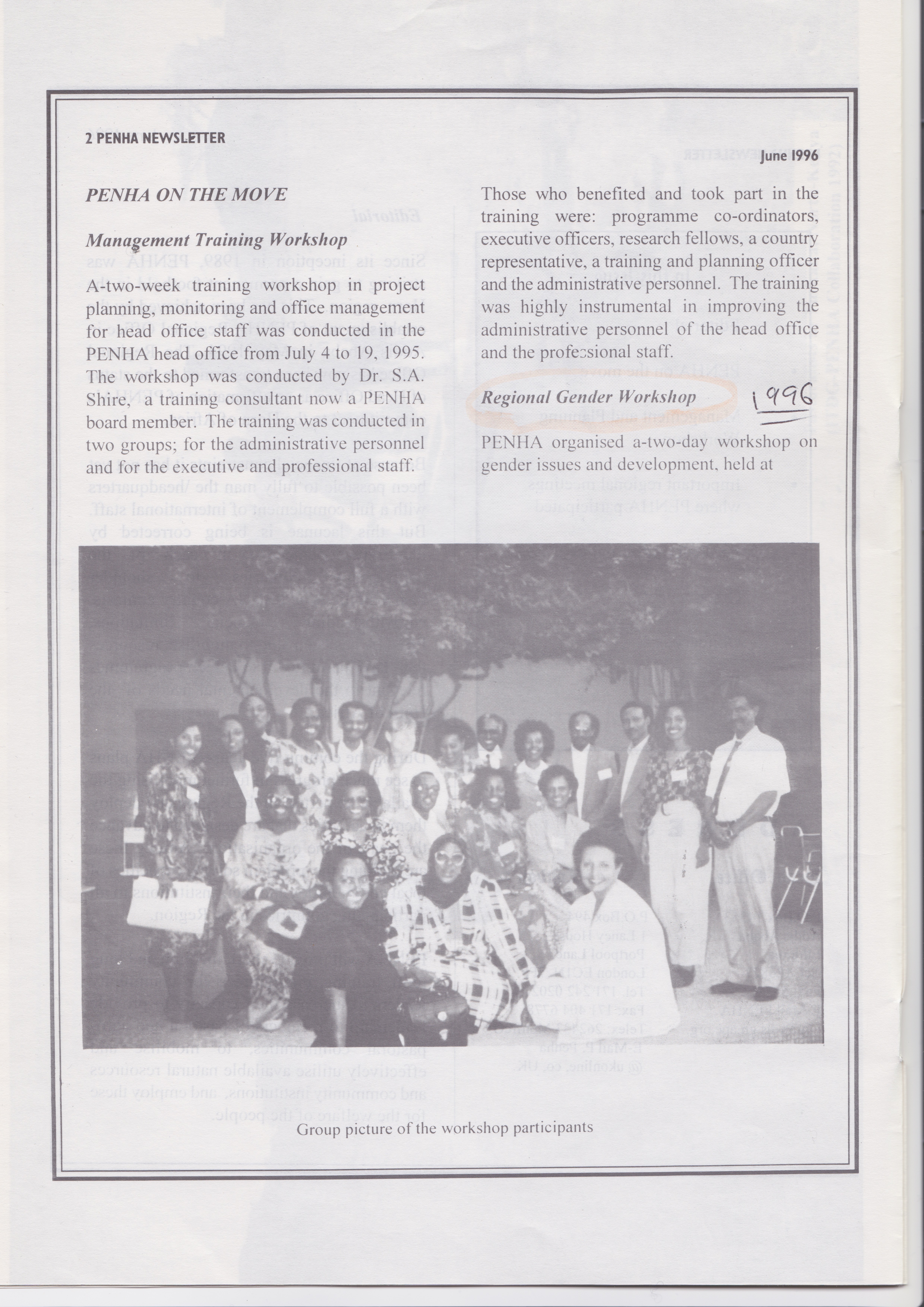
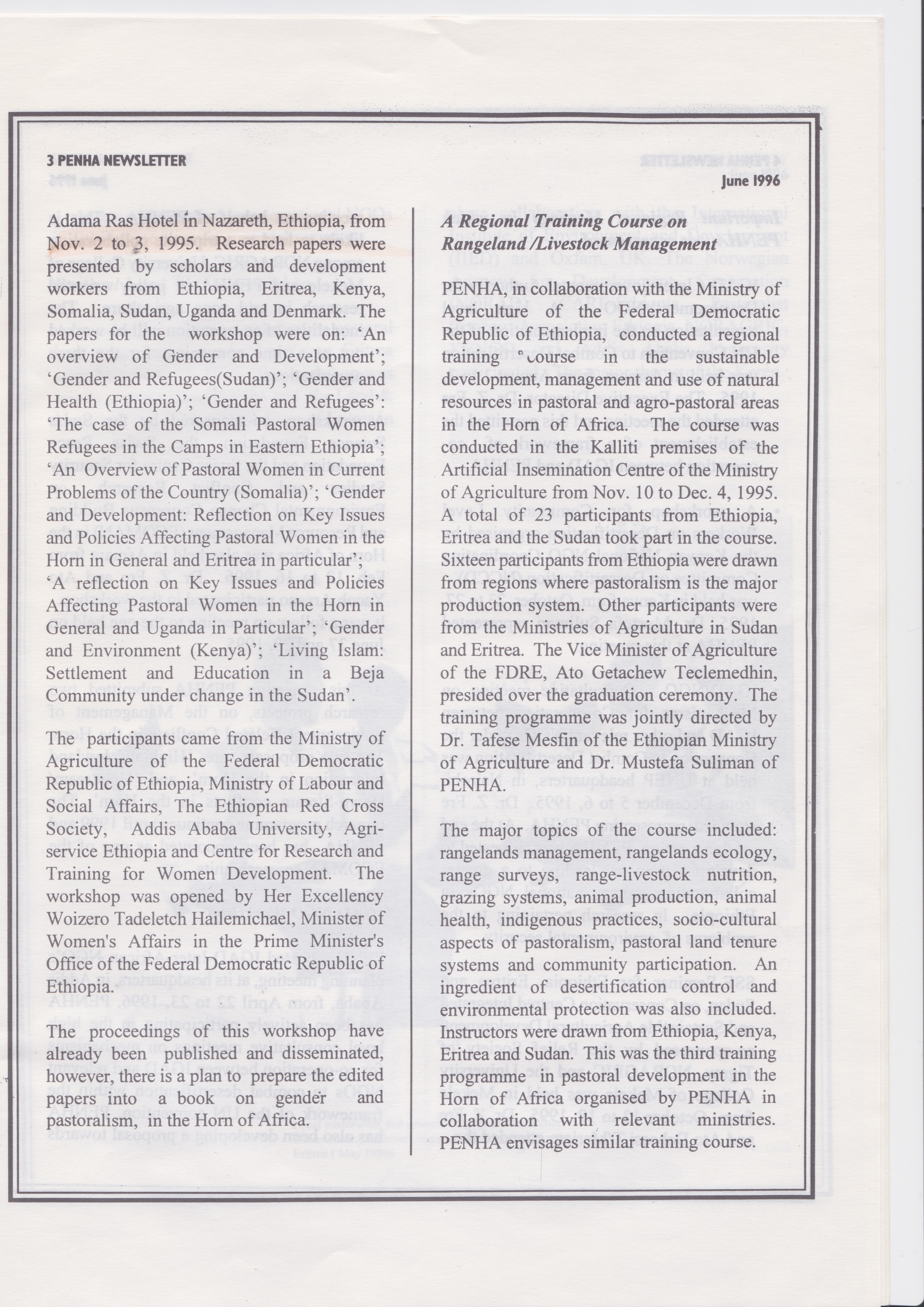
One of PENHA’s key achievements has been its focus on gender equality. Recognizing the compounded marginalization of pastoralist women, PENHA hosted regional gender workshops since 1996 and has launched initiatives like the Women’s Economic Empowerment Project in 2007, funded by the Danish government. This project aimed to equip women with business skills, improve access to finance, and advocate for supportive policies.
Figure 1. PENHA Newsletter on Regional Gender Workshop in 1996.
Cultural and Religious Barriers
The Horn of Africa is deeply influenced by Abrahamic faiths, including Orthodox Christianity and Islam, both of which have historically reinforced traditional gender roles. Early marriages, limited access to education, and economic exclusion are pervasive issues. PENHA’s approach to these challenges has been more nuanced. Rather than imposing rapid external solutions, the organization works within communities to shift mindsets.
A key insight from Dr. Fre emphasizes that meaningful change comes when communities themselves reframe discussions about traditional practices: “We don’t approach issues like FGM as isolated ‘problems to fix’ but as part of complex social ecosystems. Lasting transformation happens when women’s groups lead the analysis of how these practices intersect with economic disempowerment and lack of education access.”
Economic Empowerment and Education
The Women’s Economic Empowerment Project was implemented in Uganda, Somalia, and Sudan, three countries with distinct cultural and ecological contexts. In Uganda, women were already active in trade and farming, while in Somalia and Sudan, their roles were more confined. The project focused on three interconnected pillars to address systemic barriers faced by pastoralist women (Pastoral women lack land for collateral and struggle to get loans through traditional banking). Furthermore, few if any women own the livestock.
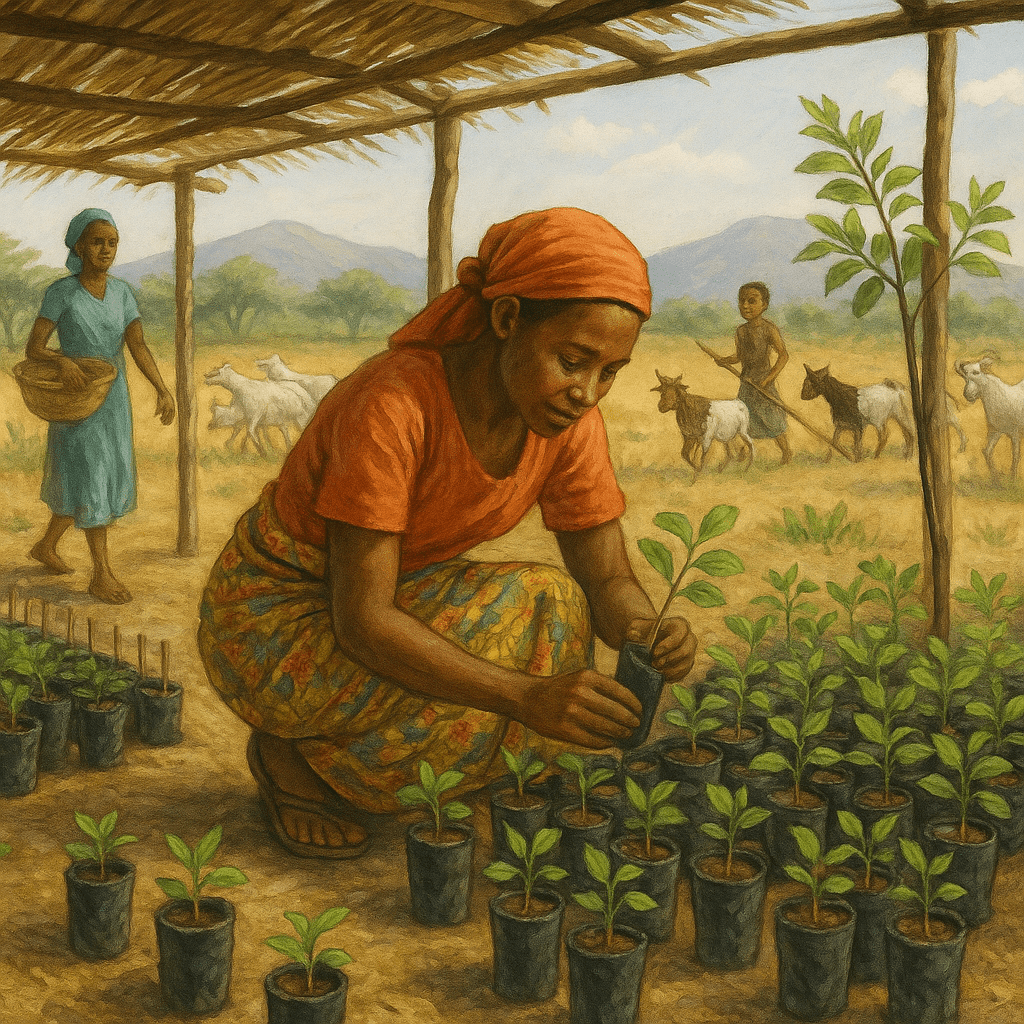
1. Microloan for Cattle and Enterprise: PENHA tackled the systemic exclusion of pastoral women from formal banking by offering access to microloans, which enabled them to invest in livestock (e.g., owning goats is a step towards financial independence) and/or establish small businesses. The program supplemented this with practical training in livestock management and market strategies. Over time, participants diversified beyond livestock into varied micro-enterprises, including tree nurseries, catering services, and medical shops, demonstrating the program’s success in creating adaptable economic opportunities rooted in local needs.
2. Increased Literacy Amongst Pastoralists: The program integrated functional literacy training specifically designed for pastoralist women, focusing on practical financial skills needed to manage their small businesses. Participants learned to maintain savings records, calculate interest, and track loan repayments—competencies that transformed their ability to participate in local economies. This literacy component was crucial for ensuring women could independently manage their businesses and savings without relying on male family members or intermediaries. For instance, one of PENHA’s officers, Elizabeth Katushabe, who was also part of the literacy program, was the first woman from the Kanyanyeru Resettlement community (near Mbarara) to graduate from Makerere University. Women who gained literacy and financial skills through the program have now become trainers themselves, empowering others in their communities. This cascading effect multiplies the project’s impact, as knowledge is passed on and more women gain the tools for economic independence.
3. Leadership & Governance Training: Beyond economic gains, the program cultivated women’s leadership to tackle structural inequalities. Participants received training to advocate for resource rights and participate in community decision-making—spaces traditionally dominated by men. Women learned to navigate local governance systems, influencing decisions about land use and water access that directly affected their livelihoods. This empowerment rippled outward as program graduates assumed roles as trainers and community representatives, institutionalizing women’s voices in spaces where they’d historically been excluded. By linking financial independence with leadership development, PENHA ensured economic gains translated into lasting social change.
Figure 2. Pastoralist Women Managing Tree Nursery.
Hybrid Knowledge Systems: Indigenous Knowledge and Scientific Knowledge In Dr. Fre’s book, Knowledge Sovereignty Among African Cattle Herders (2018), he underscores the value of indigenous knowledge in a world dominated by scientific knowledge. The book primarily focuses on the indigenous knowledge systems (IKS) of the Beni-Amer cattle herders in the Horn of Africa, with an emphasis on cattle breeding, husbandry, and ethno-veterinary practices. While the book highlights the patriarchal nature of Beni-Amer society and briefly mentions the roles of women in dairy processing, leatherwork, and small ruminant management, it does not extensively explore indigenous women’s knowledge. In the podcast, Dr. Fre Fre acknowledges this gap in research and decides to expand on indigenous women’s expertise, such as:
Ecological knowledge: Women monitor grazing conditions and water sources while managing homesteads, acting as informal environmental stewards.
Ethno-veterinary knowledge: Women treat small stock (goats/sheep) using medicinal plants.
Dairy innovation: Women’s techniques for fermenting milk, preserving butter, and tanning leather are described as sophisticated, intergenerational knowledge.
Dr. Fre’s podcast remarks suggest his later reflections on gender gaps in preserving indigenous knowledge systems, postdating the book’s publication in 2018.
The Road Ahead
As Penha celebrates its 35th anniversary in 2024, Dr. Fre envisions a future where the organization broadens the organization’s impact to tackle climate change and sustainability while extending its reach to smallholder farmers. At the same time, Penha remains steadfast in its core mission: advancing gender equality and conflict resolution in the region. He emphasizes the importance of peacebuilding in a region plagued by instability and the need to empower a new generation of leaders.
Conclusion
The journey toward gender equality in pastoralist communities is far from over, but PENHA’s work demonstrates the power of grassroots activism, education, and respect for indigenous knowledge. By challenging deep-rooted norms and empowering women economically and socially, PENHA offers a blueprint for sustainable change—one that grows with communities, not over them.
For more insights, listen to the full podcast episode on Gender Equality and Pastoralism in the Horn of Africa.

 A democratic space for sharing stories on replenishing the Earth